Research
構造物・機械の耐久性(疲労/腐食/摩耗)
今後導入の進む浮体式洋上風力発電施設では,海水中で摩耗や腐食に長期間曝される係留鎖の健全性を適切に評価する必要があり,浮体-係留索の応答解析や摩耗試験による摩耗特性の把握を行っています.また,バラストタンクのように乾湿交番に曝される厳しい環境では腐食損耗の予測技術も重要であり,塗膜損傷と金属腐食の連成解析や統計モデルによる腐食衰耗から疲労破壊に至るまでの長期予測に関する研究も行っています.
Durability of structural and mechanical systems: fatigue, corrosion, and wear
For floating offshore wind turbines, it is necessary to properly evaluate the integrity of mooring chains, which are exposed to wear and corrosion in seawater. A wear test of the mooring chain and a coupled analysis of the floating body and mooring chain are performed. In addition, in severe environments such as ballast tanks, which are exposed to dry and wet cycles, it is also important to predict corrosive damage, and we are conducting research on the coupled analysis of coating damage.
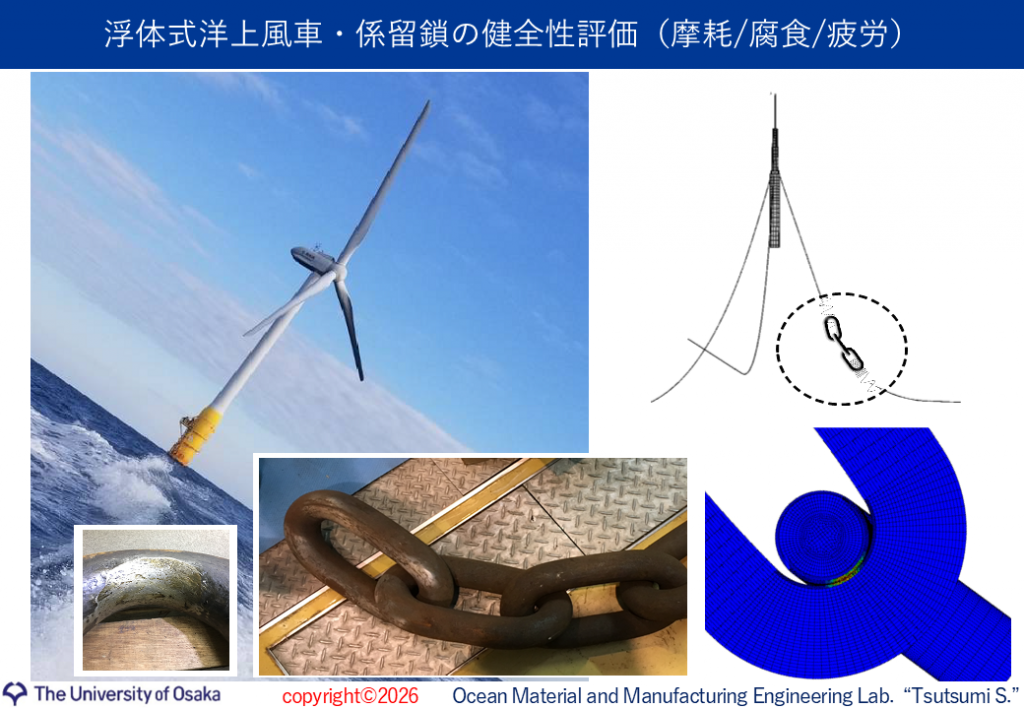
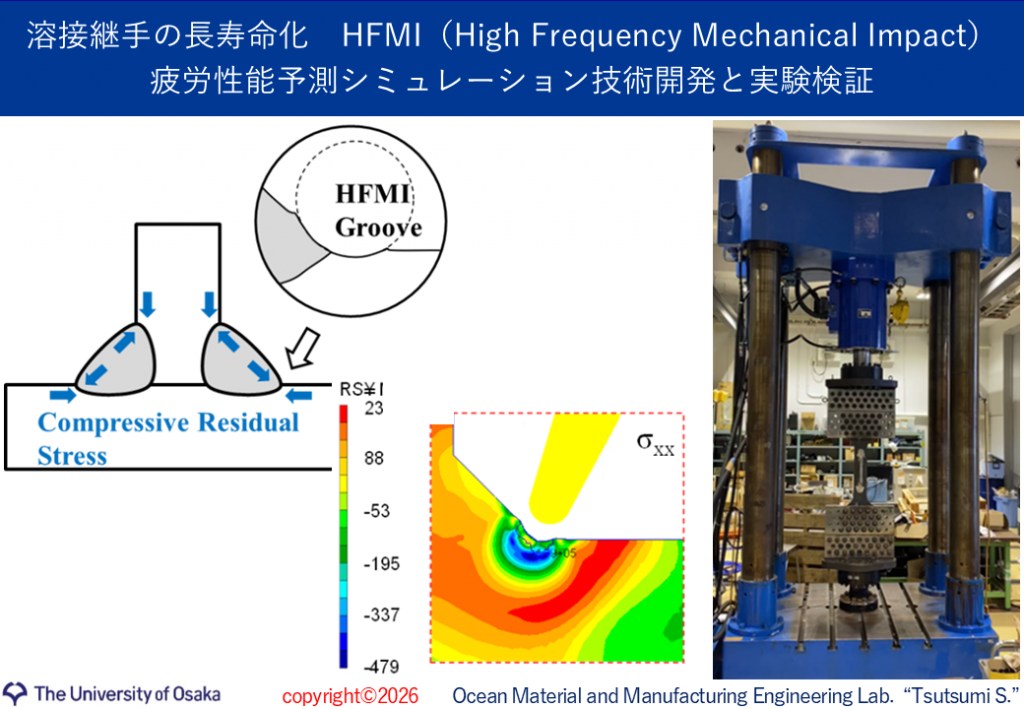
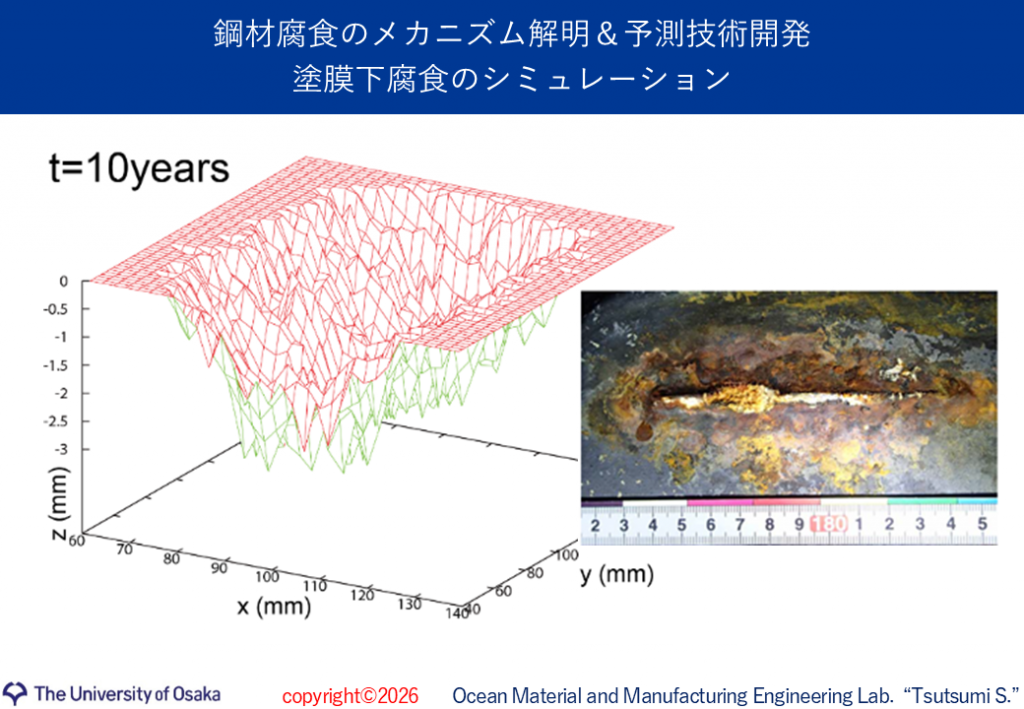
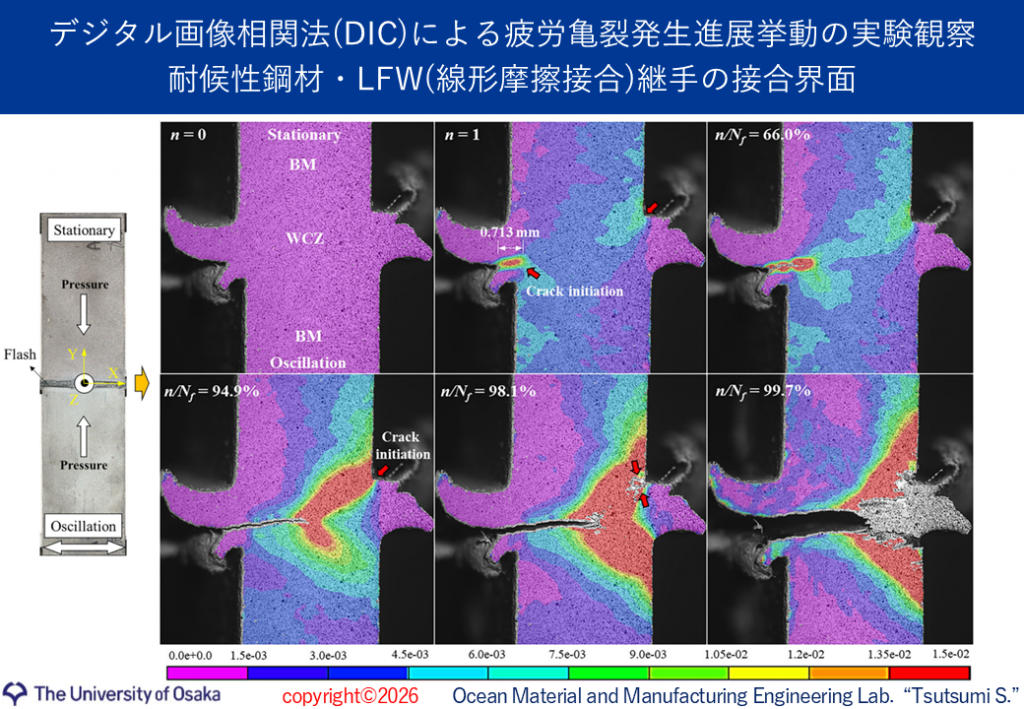
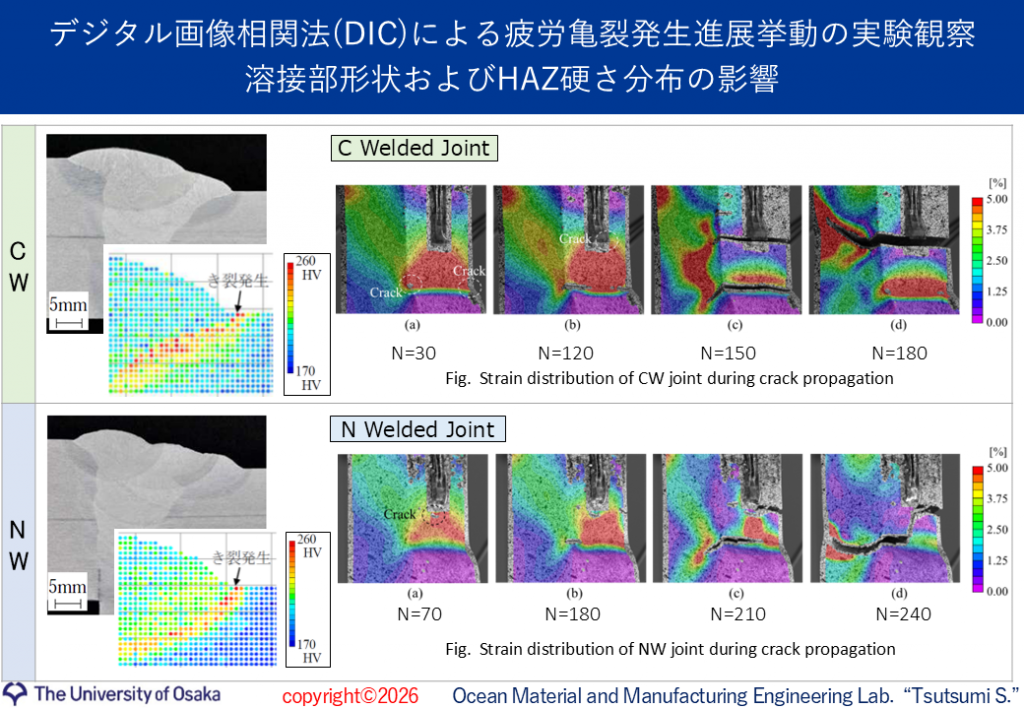
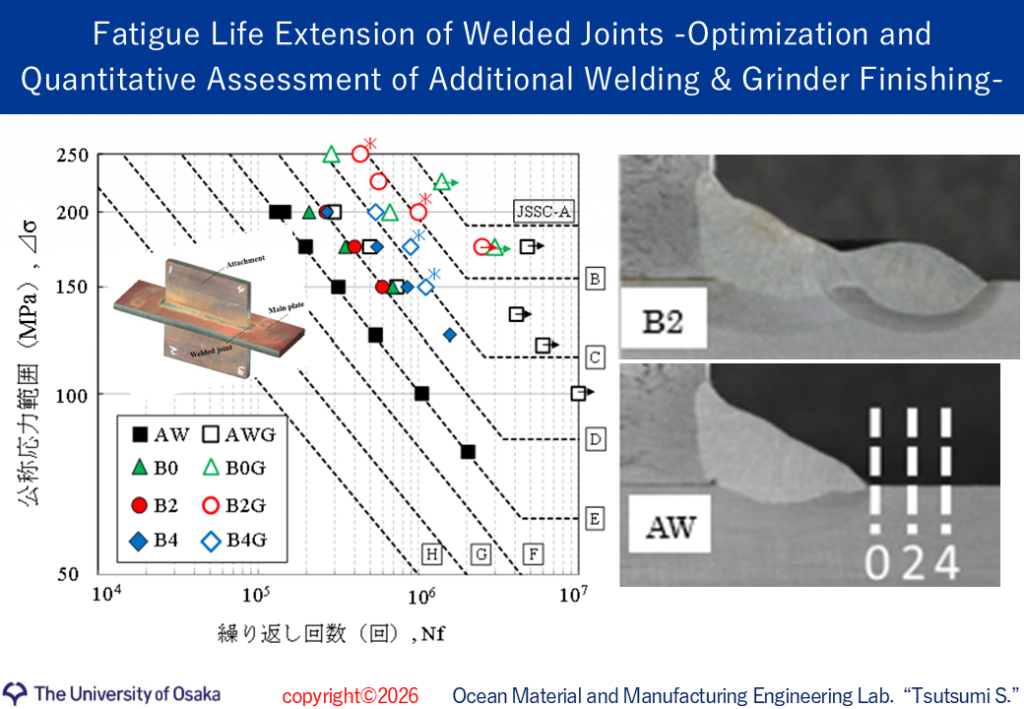
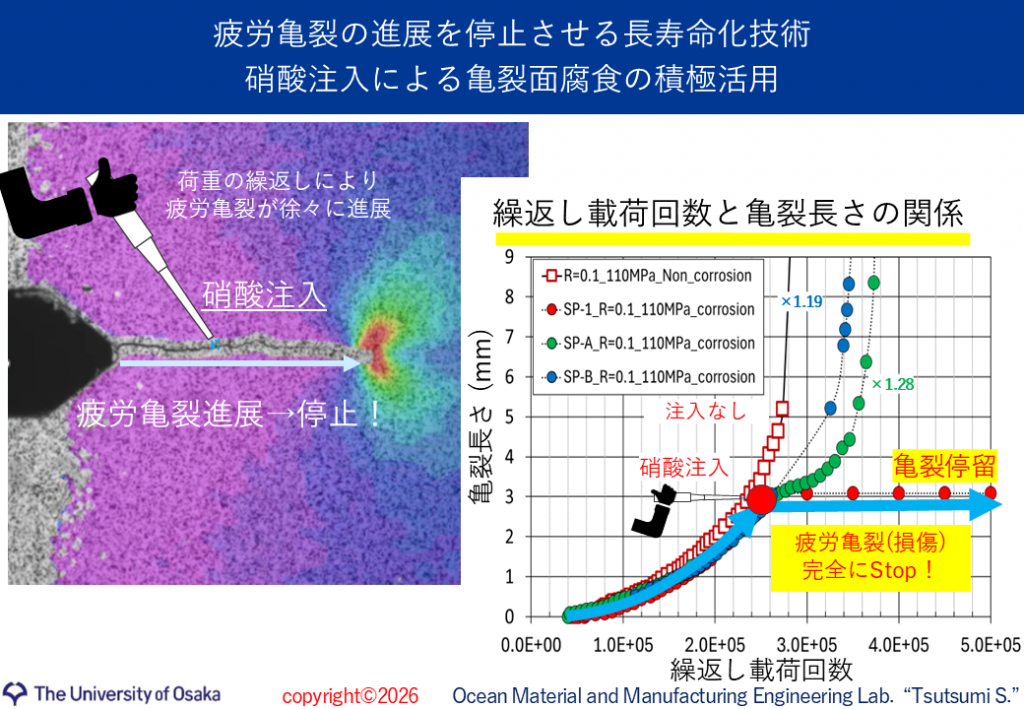
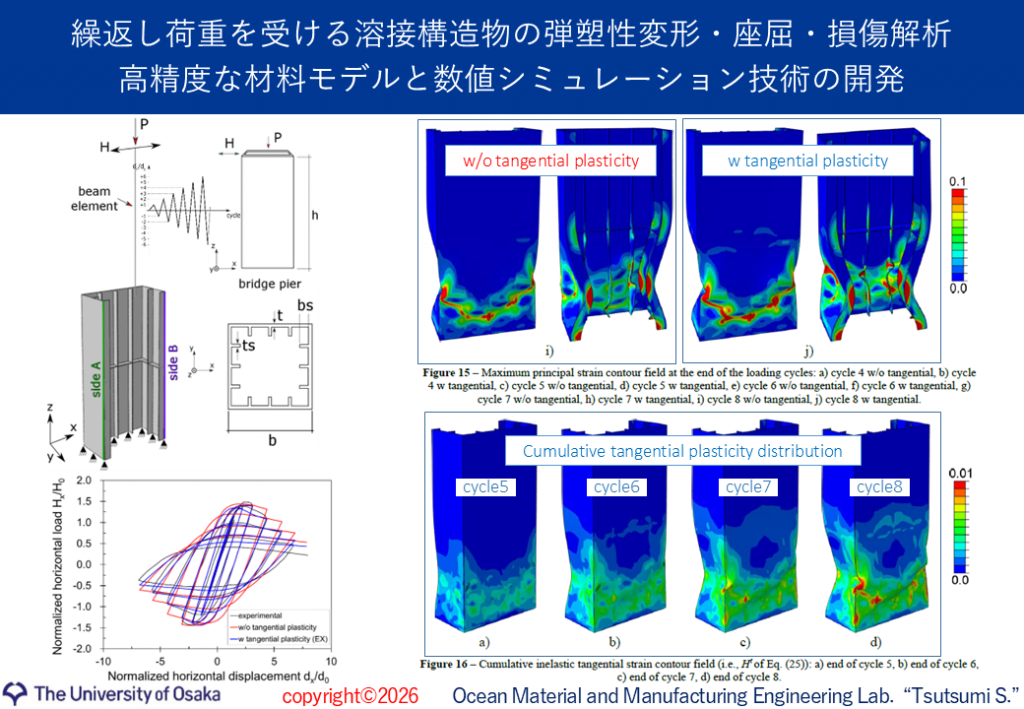
疲労/腐食/摩耗メカニズム解明と寿命評価技術の開発
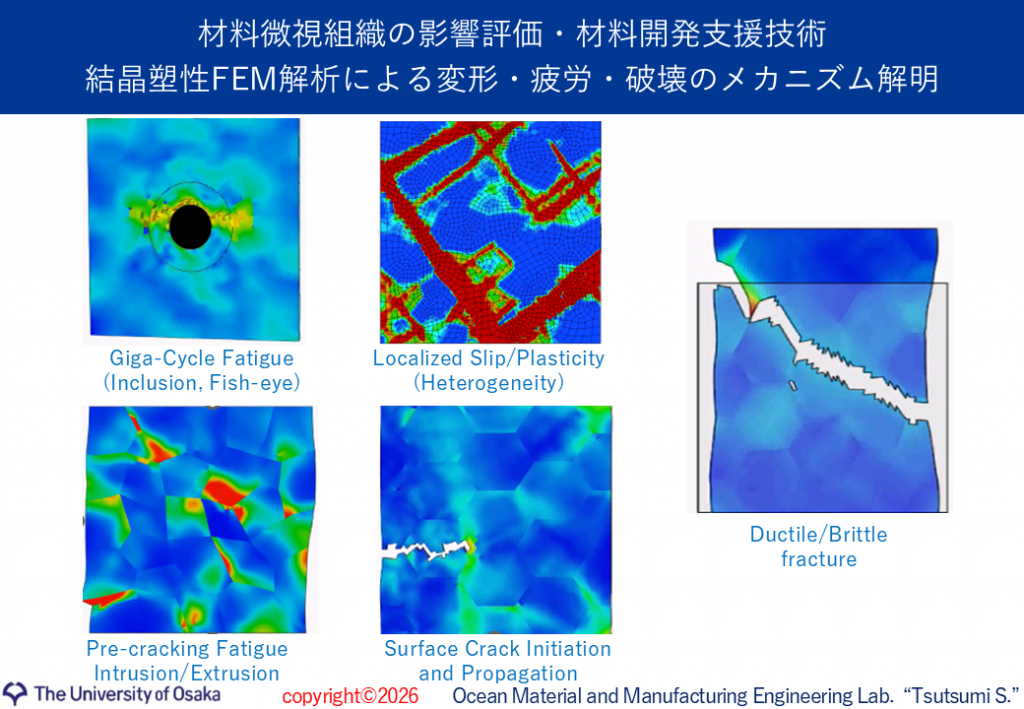
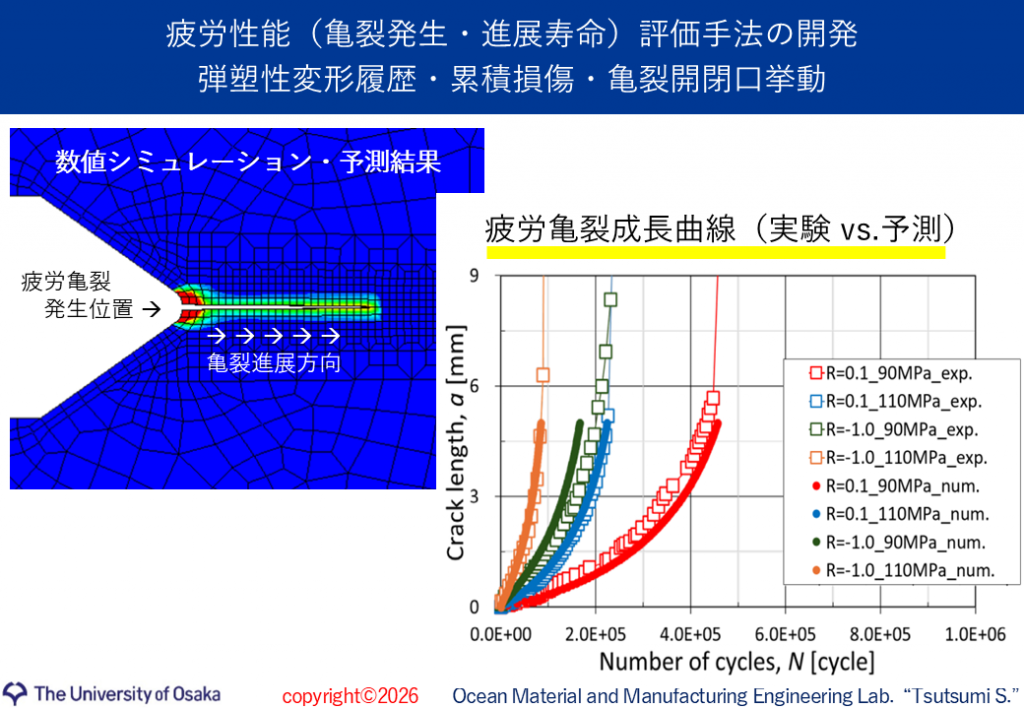
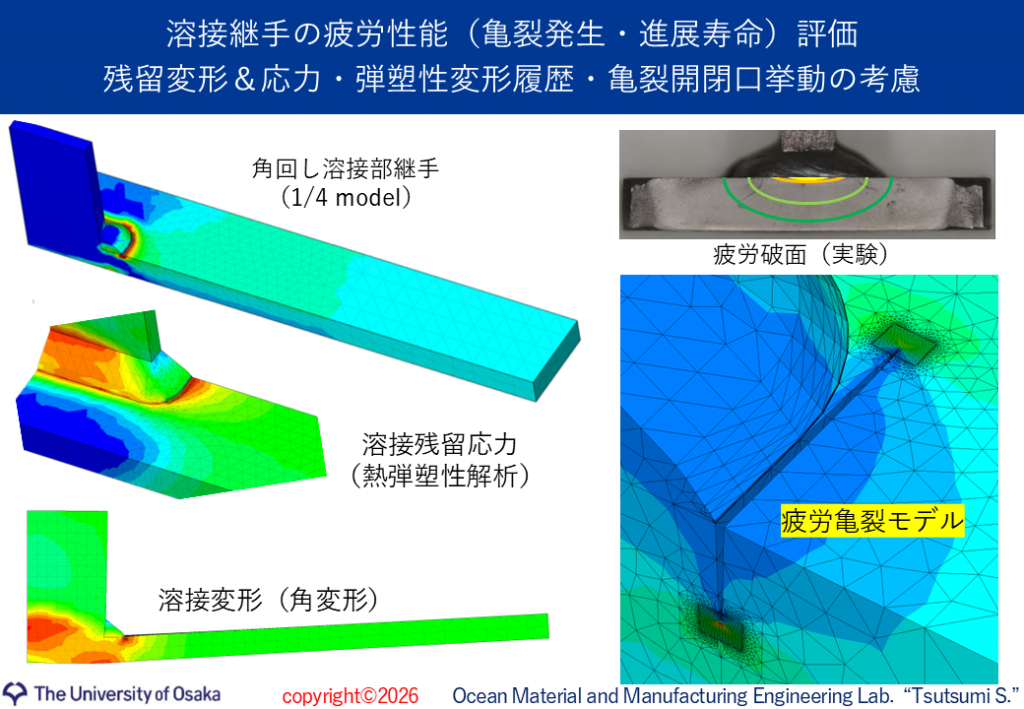
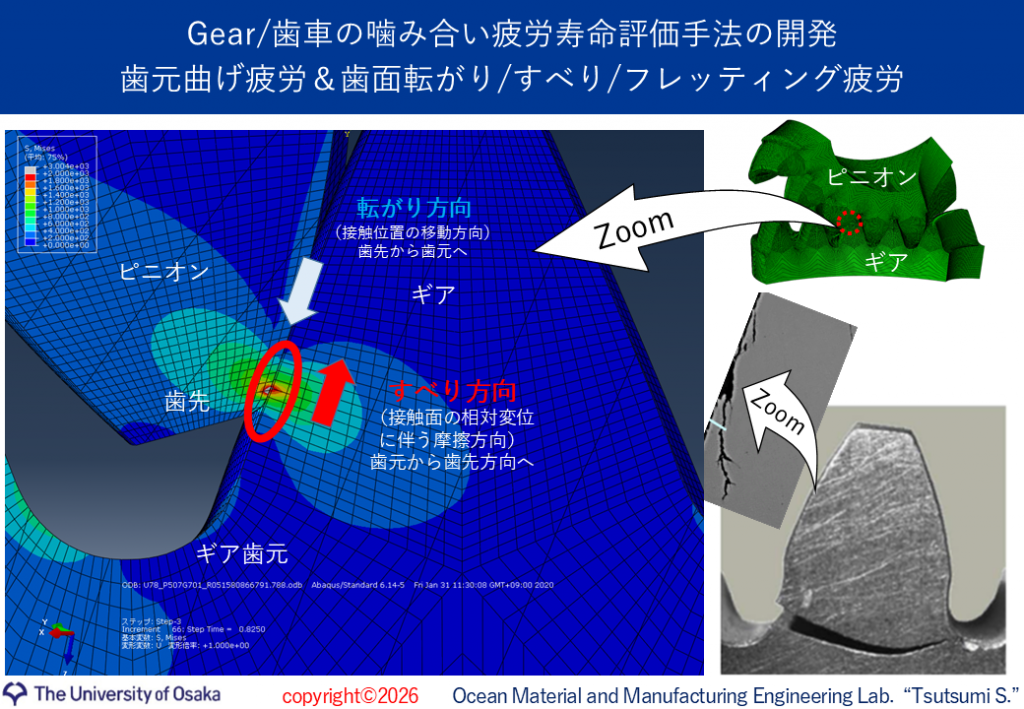
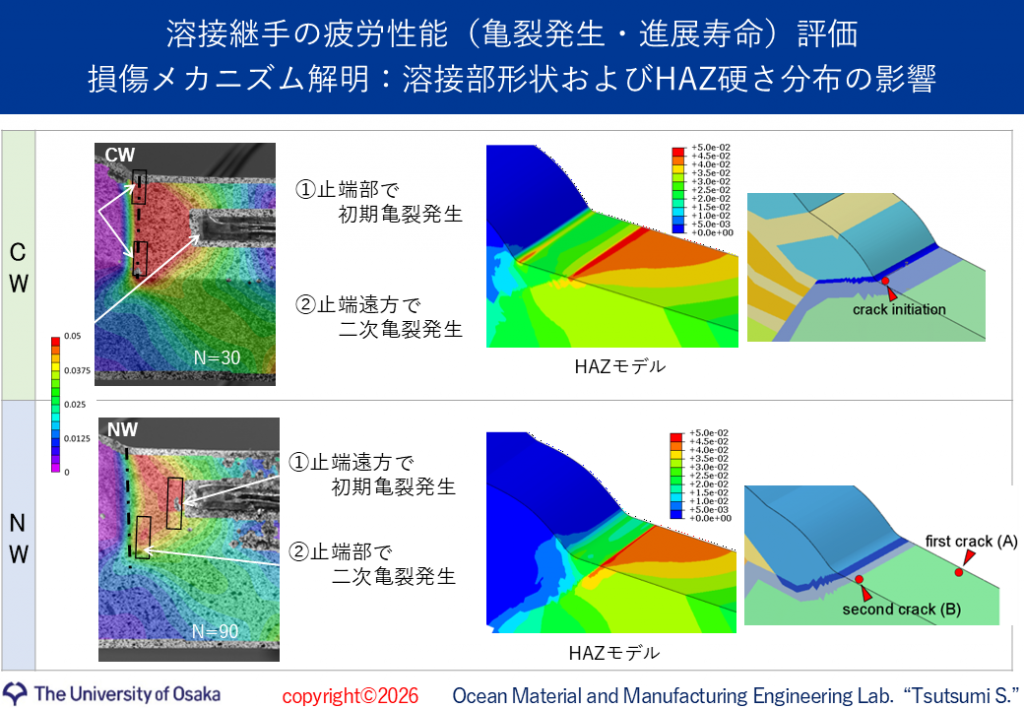
外洋を航行する船舶の構造健全性を適切に評価するためには,船舶の遭遇する波浪荷重の時刻歴をモデル化するとともに,高周波ピーニング(HFMI)・部分加熱・硝酸(腐食)を活用した疲労亀裂閉口促進技術といった疲労強度改善法による寿命延伸効果をマルチフィジックス解析により定量的に評価する必要がある.疲労試験を行うことでこれらの検証を行うだけでなく,最新の弾塑性FEM解析技術の確立やそれらを援用する疲労亀裂発生・進展評価手法,XFEM解析技術の拡張,破壊力学的手法などに基づいて,各種寿命延伸技術の効果検証や破壊現象のメカニズムを明らかにしようとしている.
Development of technologies for elucidating fatigue, corrosion, and wear mechanisms and for service‑life evaluation
In order to properly evaluate the ship’s structural integrity, it is necessary to model the time history of wave-induced loads encountered and to quantitatively evaluate the effect of fatigue strength improvement methods such as high-frequency mechanical impact (HFMI) treatment and partial heating on life extension. We perform not only the fatigue tests to verify it but also fracture mechanics analysis to clarify the mechanism of fracture phenomena after HFMI treatment.
データサイエンスの維持管理・生産工学への応用
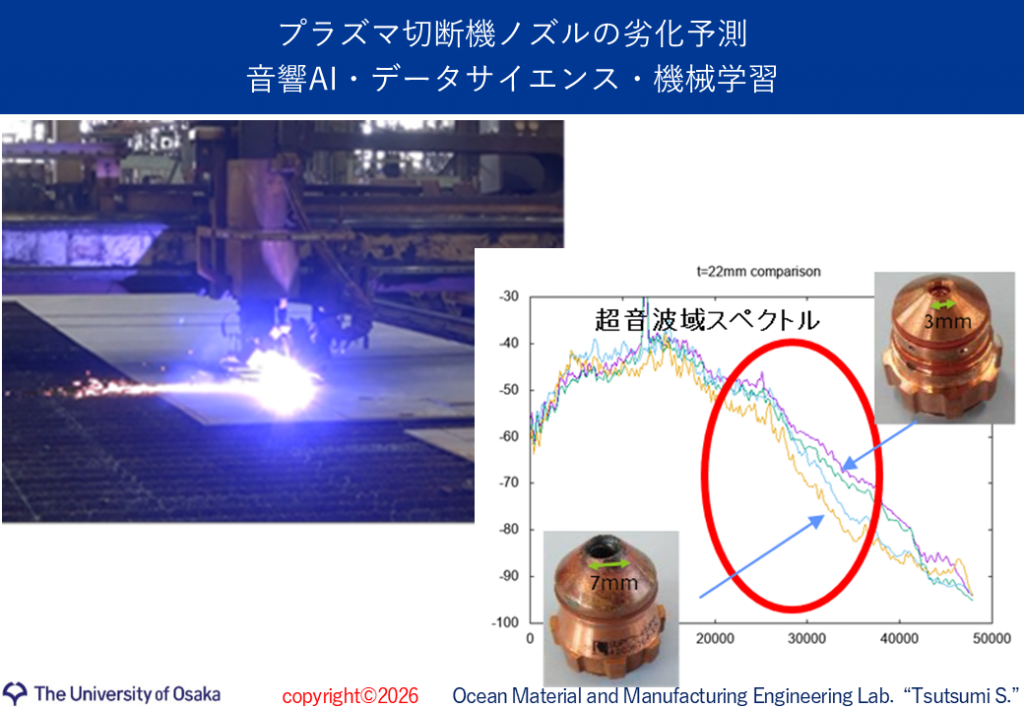
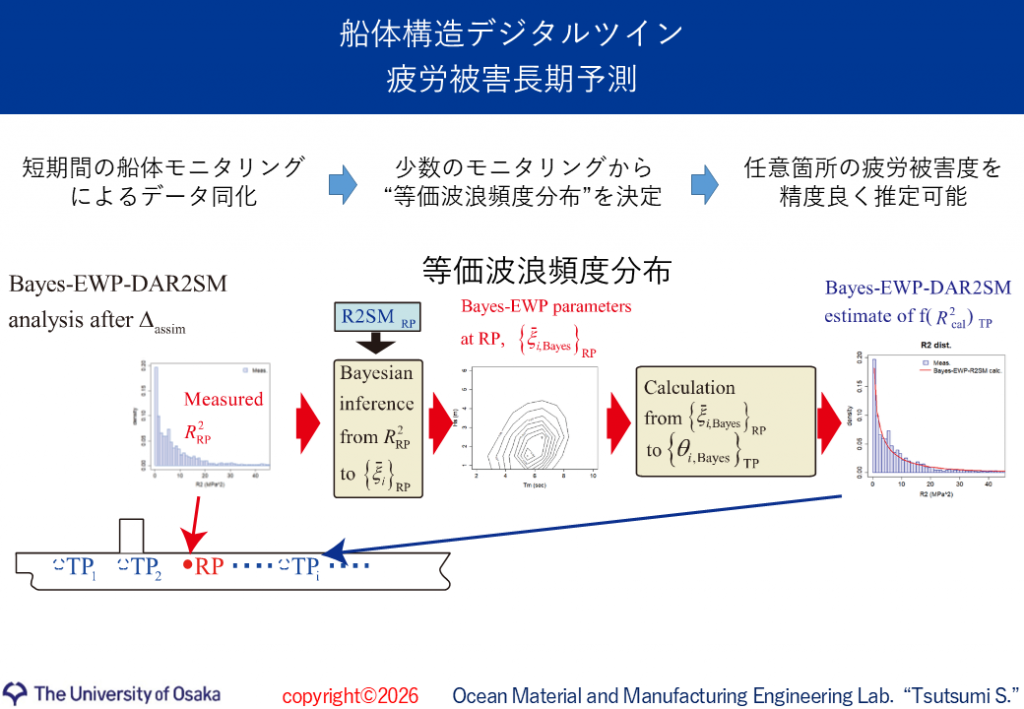
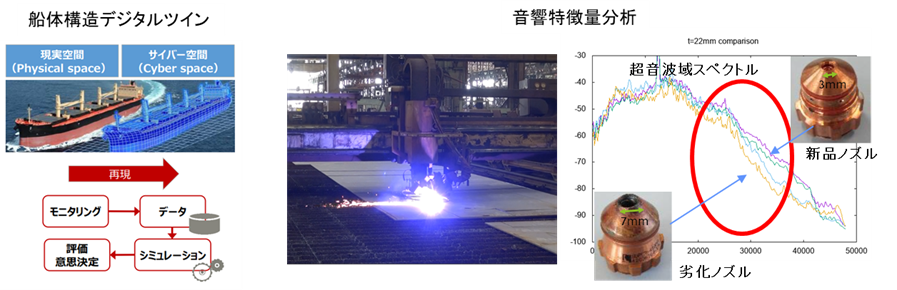
船体の構造応答のモニタリングを行い,シミュレーションによるデータ同化を行うことで,限られた計測点の情報から同化箇所における構造応答を推定することができ,これによりメンテナンスの合理化や運航支援に活用することができる(船体構造デジタルツイン).その他,鋼板のプラズマ切断音を機械学習し,適切な交換期間をAIが判断することで,造船工作全体の生産性の向上が期待できる.
Data‑science–driven approaches to maintenance management and production engineering
By monitoring the structural response of a ship’s hull and assimilating data through simulation, it is possible to estimate the structural response at assimilated points from a limited number of measurement points, which can be used to rationalize maintenance and support ship operations. In addition, the productivity of shipbuilding work can be improved by machine learning the sound of plasma cutting of steel plates and allowing the AI to determine the appropriate replacement period.
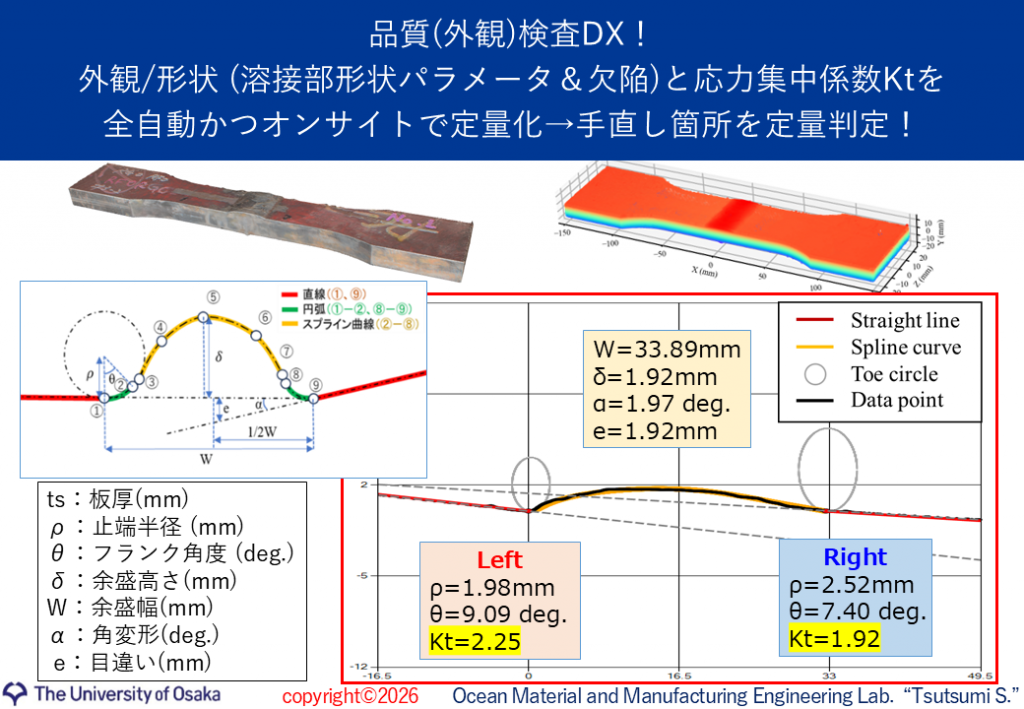
品質検査DX(外観検査・欠陥検出を全自動化)
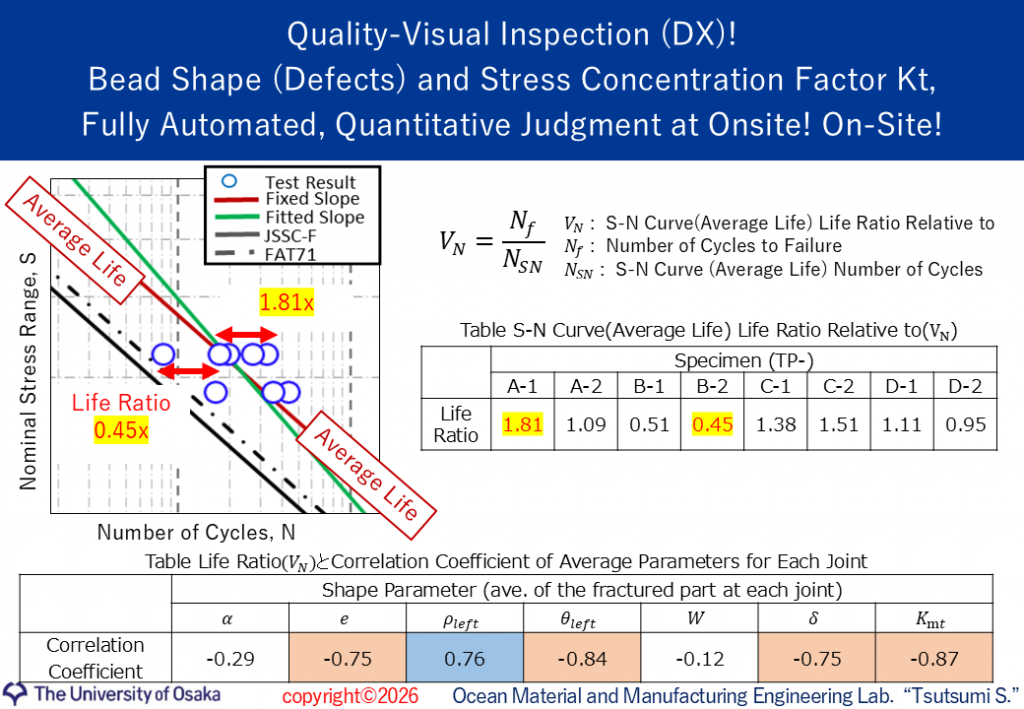
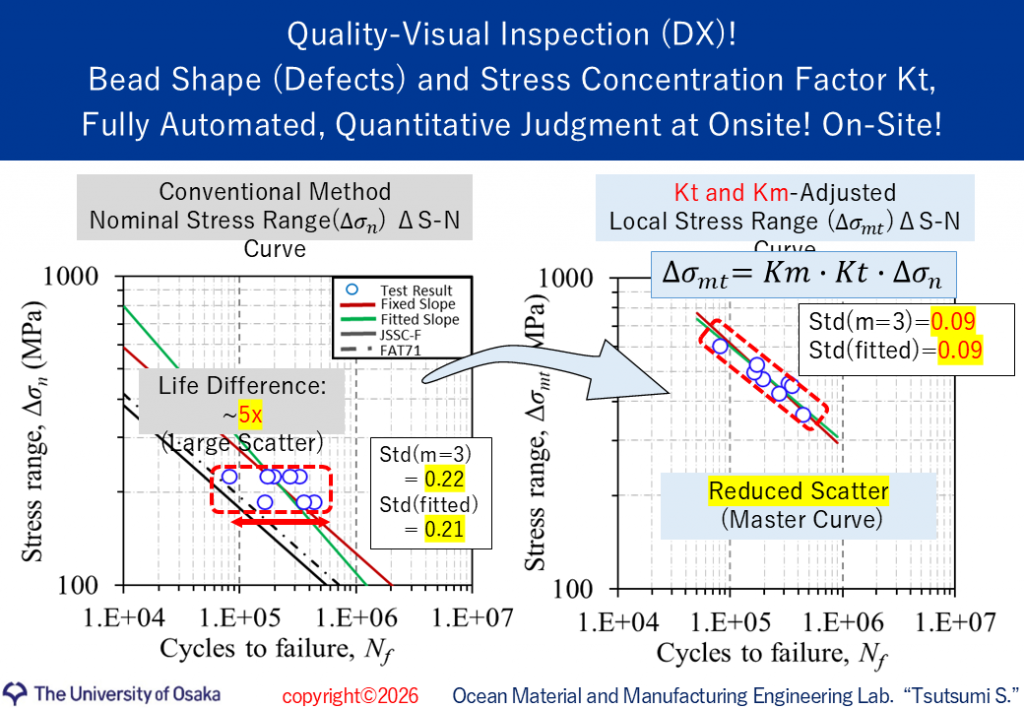
溶接構造物の外観検査は、構造物の安全性・信頼性を確保するための最も基本的かつ重要な工程です。ビード形状不良、アンダーカット、割れ、ブローホールなどの欠陥は疲労破壊の起点となり、放置すれば寿命低下や重大事故につながります。外観検査で早期に欠陥を発見すれば補修が容易で、後続のUT・MT・PTなど非破壊検査の精度向上にも寄与します。また、施工者の技能評価や品質管理の基盤としても不可欠です。しかし、これらの検査工程は熟練者による目視判断に依存しており、人的負担が大きく、検査コストも高いという課題があります。近年は、アルゴリズムに基づく形状自動判定技術、AI画像解析やロボット技術を活用した省人化・自動化システムの確立が求められており、安定した品質保証と効率的な維持管理の実現に向けて研究開発を行っています。
Digital transformation of quality inspection through fully automated visual inspection and defect detection
Visual inspection of welded structures is a fundamental process for ensuring structural safety and reliability. Surface defects can become initiation sites for fatigue failure, significantly reducing service life and potentially leading to serious accidents if left unaddressed. Early detection through visual inspection enables inexpensive and localized repair, while also improving the accuracy of subsequent nondestructive testing such as UT, MT, and PT. Moreover, visual inspection serves as an essential indicator of welder skill and overall quality control. However, these inspection processes rely heavily on skilled human judgment and are labor‑intensive and costly. As a result, there is a growing demand for automated and labor‑saving inspection systems using Algorithm-based shape detection, AI‑based image analysis and robotic technologies to achieve stable quality assurance and more efficient maintenance throughout the lifecycle of welded structures.
氷海中の船舶・海洋構造物の開発
北極海や南極海など氷海という極めて特別な環境下での船舶・海洋構造物の耐氷構造の開発に関する幅広い研究を行っている.
- 氷海航行数値計算モデルの構築(氷荷重推定,海氷航行シミュレーション,船体構造応答計算)
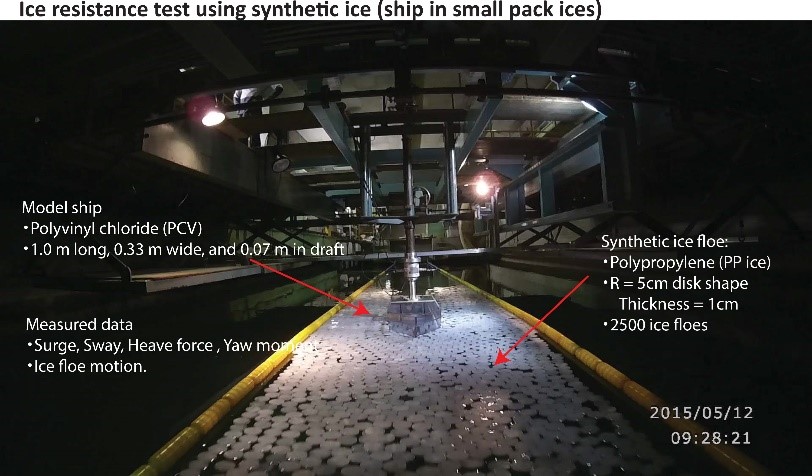
- 氷海船舶の模型船実験(氷荷重,船体応答の計測)
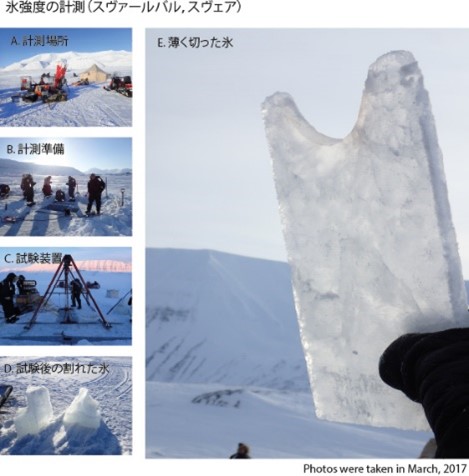
- 海氷強度の推定(海氷強度実験,海氷構造モデルの構築)
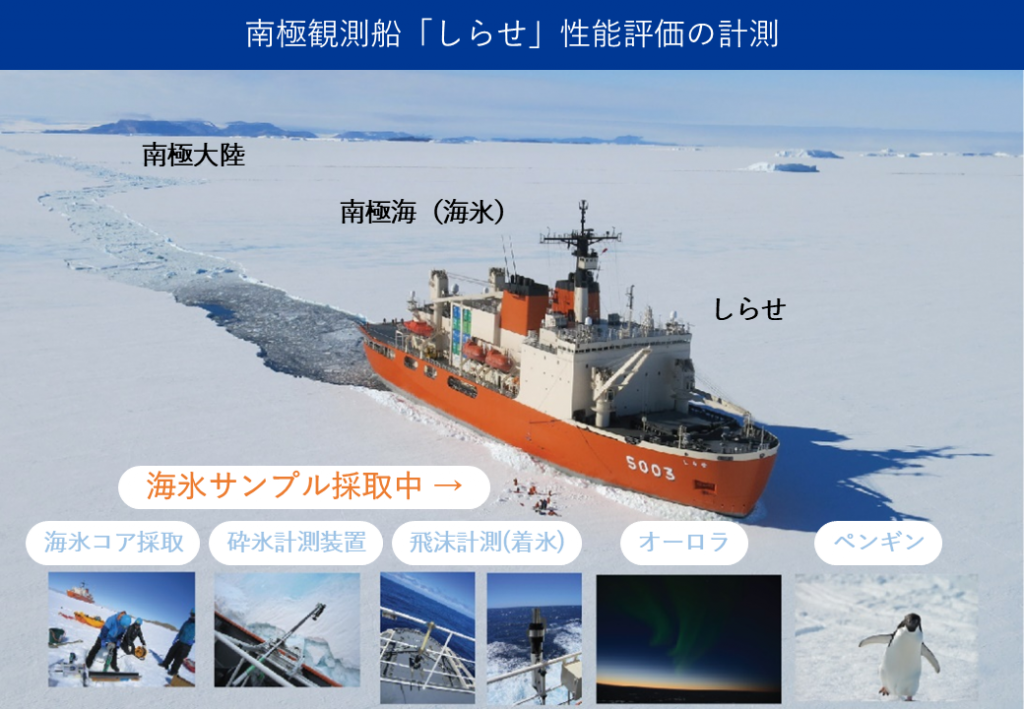
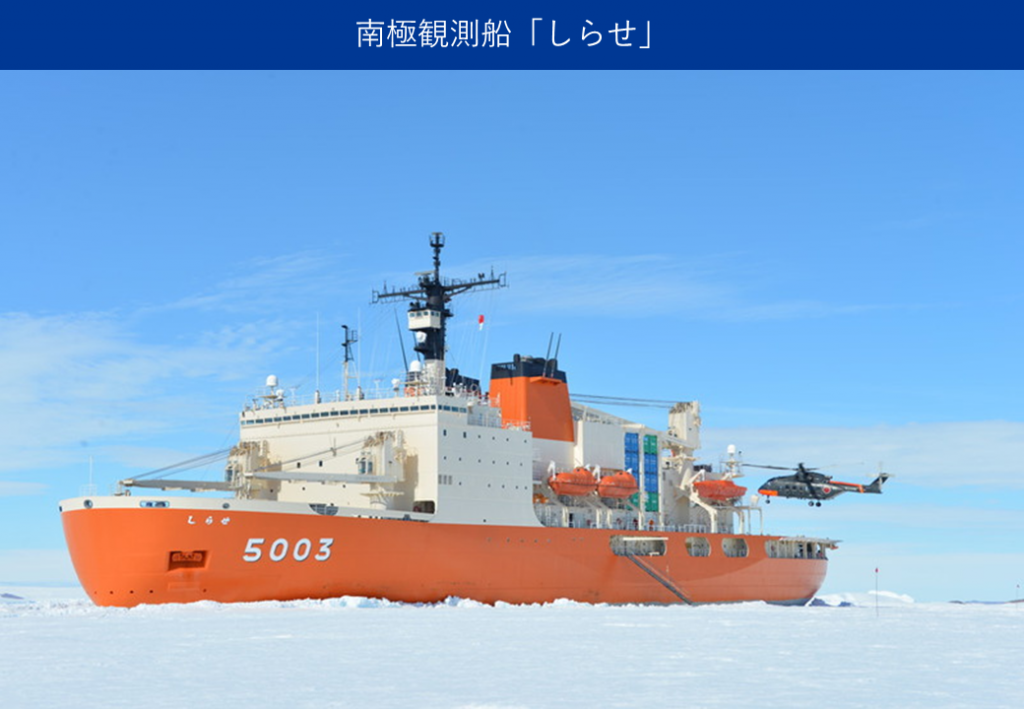
- 南極観測船「しらせ」性能評価の計測(南極海での砕氷性能の計測と解析)
Development of ships and offshore structures for ice‑covered seas
We are conducting a wide range of research on the development of ice-resistant structures for ships and offshore structures in the extremely special environments of ice seas, such as the Arctic Ocean and Antarctic Ocean.
1. Measurements for performance evaluation of the Antarctic research vessel “Shirase” (measurement and analysis of ice-breaking performance in the Antarctic Ocean)
2. Numerical modeling of ice sea navigation (ice load estimation, ice sea navigation simulation, hull structure response calculation)
3. Tank experiments on ice-resistant ships (measurement of ice loads and hull response)
4. Estimation of sea ice strength (sea ice strength experiments, construction of sea ice structure models)