Our laboratory is equipped with a wide range of facilities, from computational environments that support advanced numerical simulations to state-of-the-art measurement systems for precisely evaluating the structural integrity and motion characteristics of ships and ocean structures.
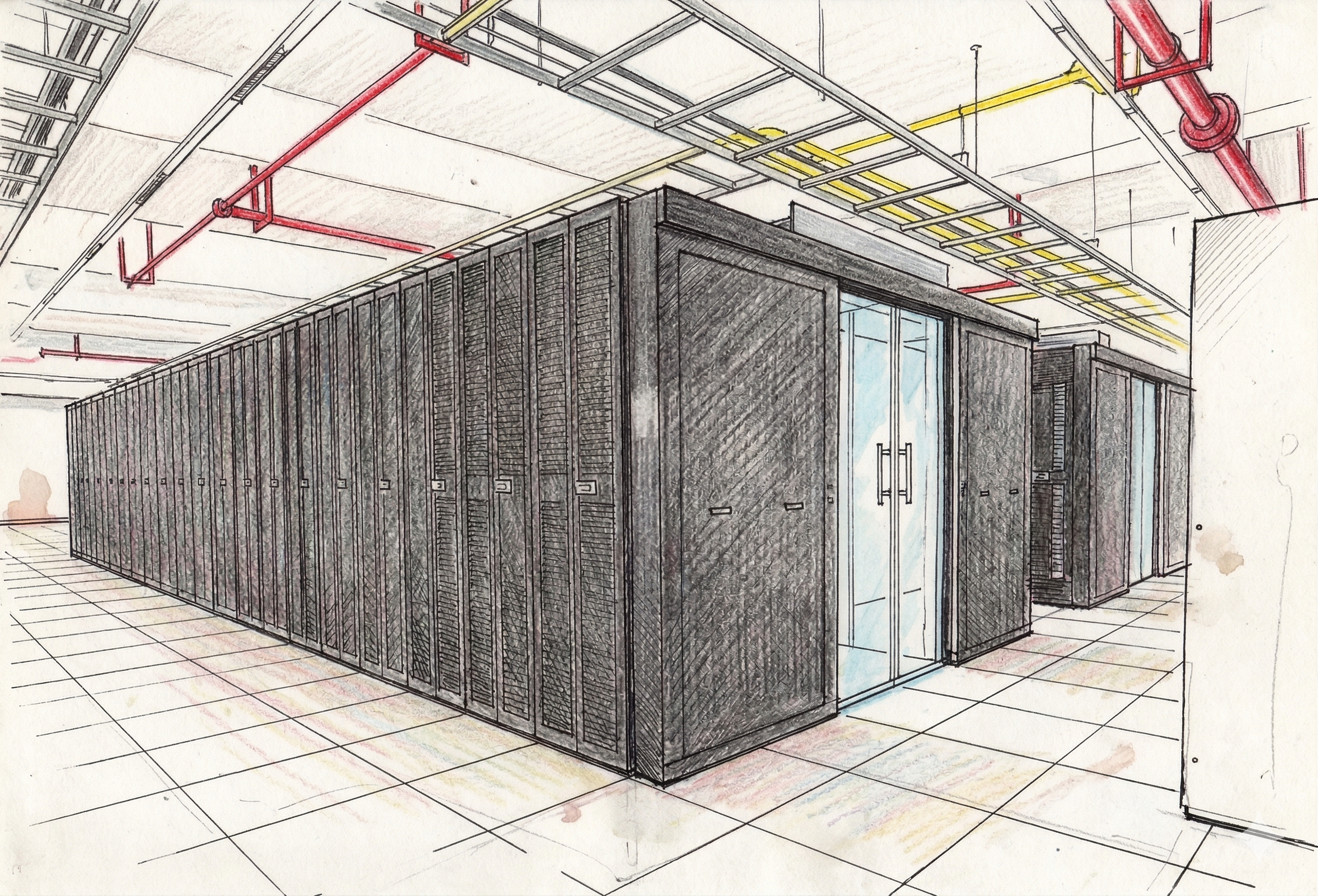
This cluster of parallel computing servers enables high-speed execution of large-scale numerical analyses, including finite element analysis (FEA) and computational fluid dynamics (CFD) simulations for ships and ocean structures. It serves as a key infrastructure supporting advanced research in the laboratory.
(Technical collaboration | GYT Tech | Email: info@scgyt.top)
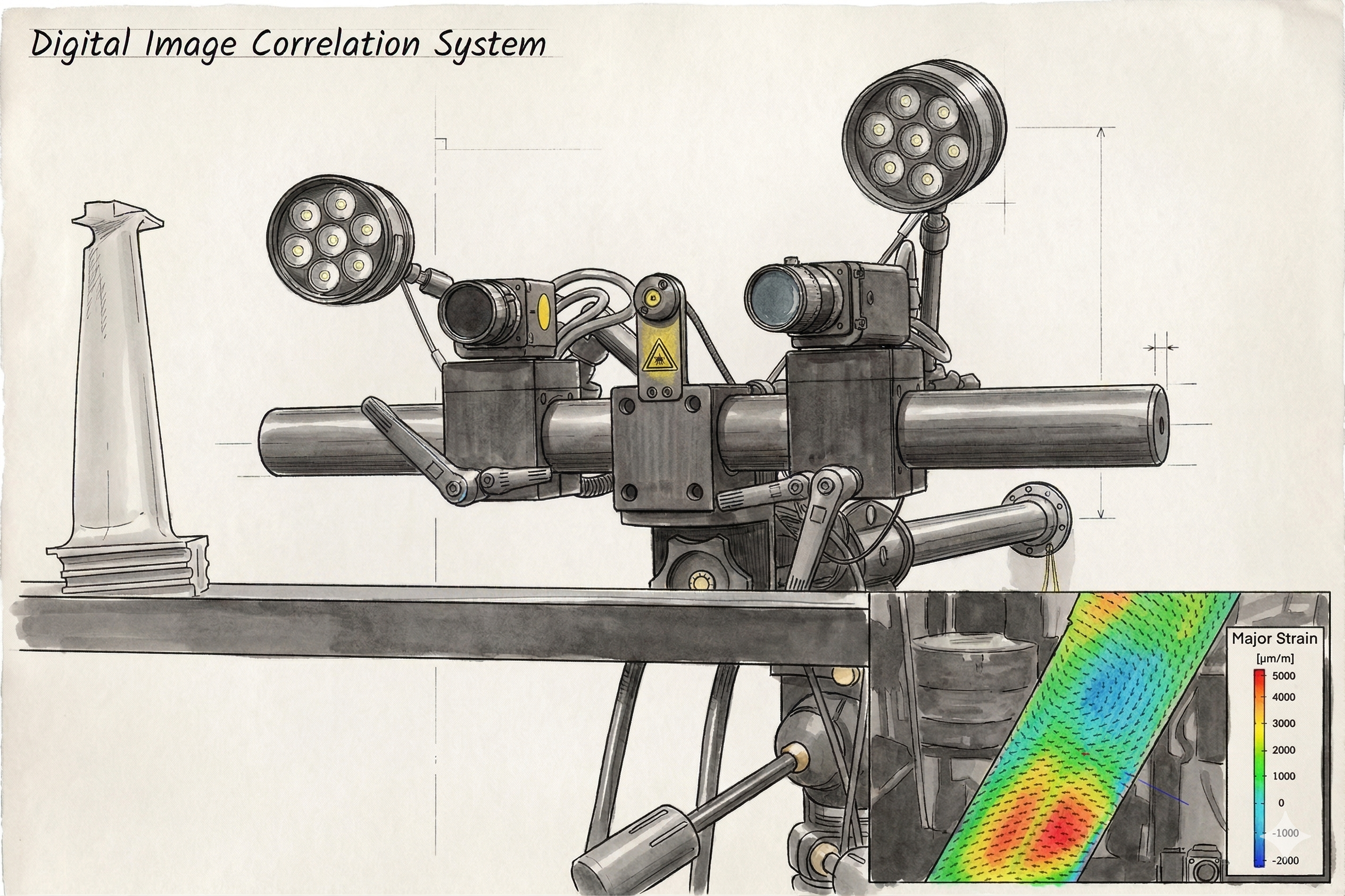
In structural experiments, this system captures the speckle pattern drawn on the surface of a specimen using high-speed cameras, and measures full-field displacement and strain distributions through image analysis in a non-contact manner. It is used to precisely capture subtle deformations such as fracture behavior of ship materials and residual stress evaluation in welded joints.
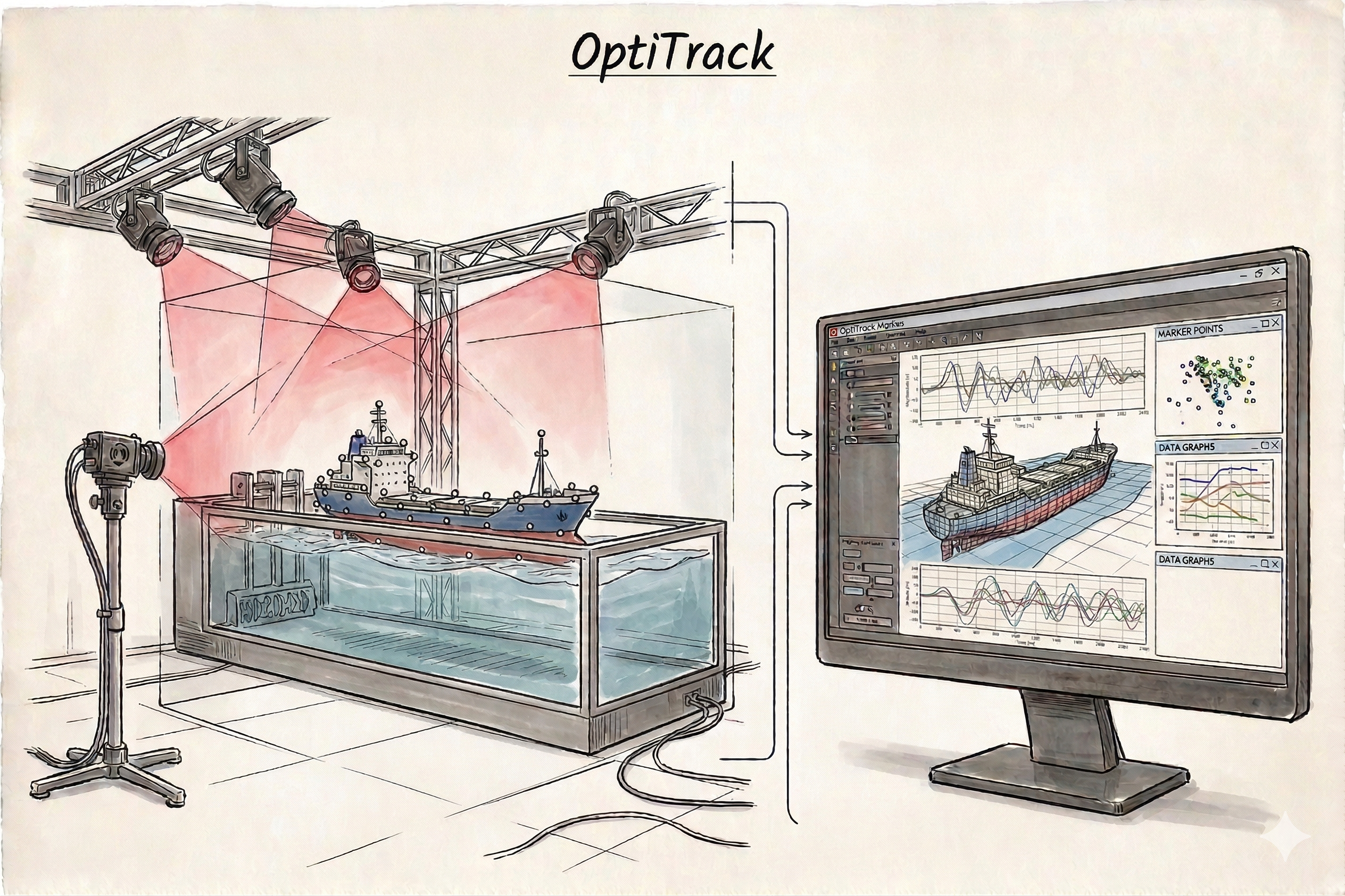
Using multiple high-performance cameras, this system measures in real time and with high precision the three-dimensional motion and attitude of specimens or ship models in model experiments, as well as relative displacements among multiple points. It is applied to studies such as slam impact response measurements of ship models in towing-tank experiments and motion measurements of floating offshore wind turbines under wind and wave loading.
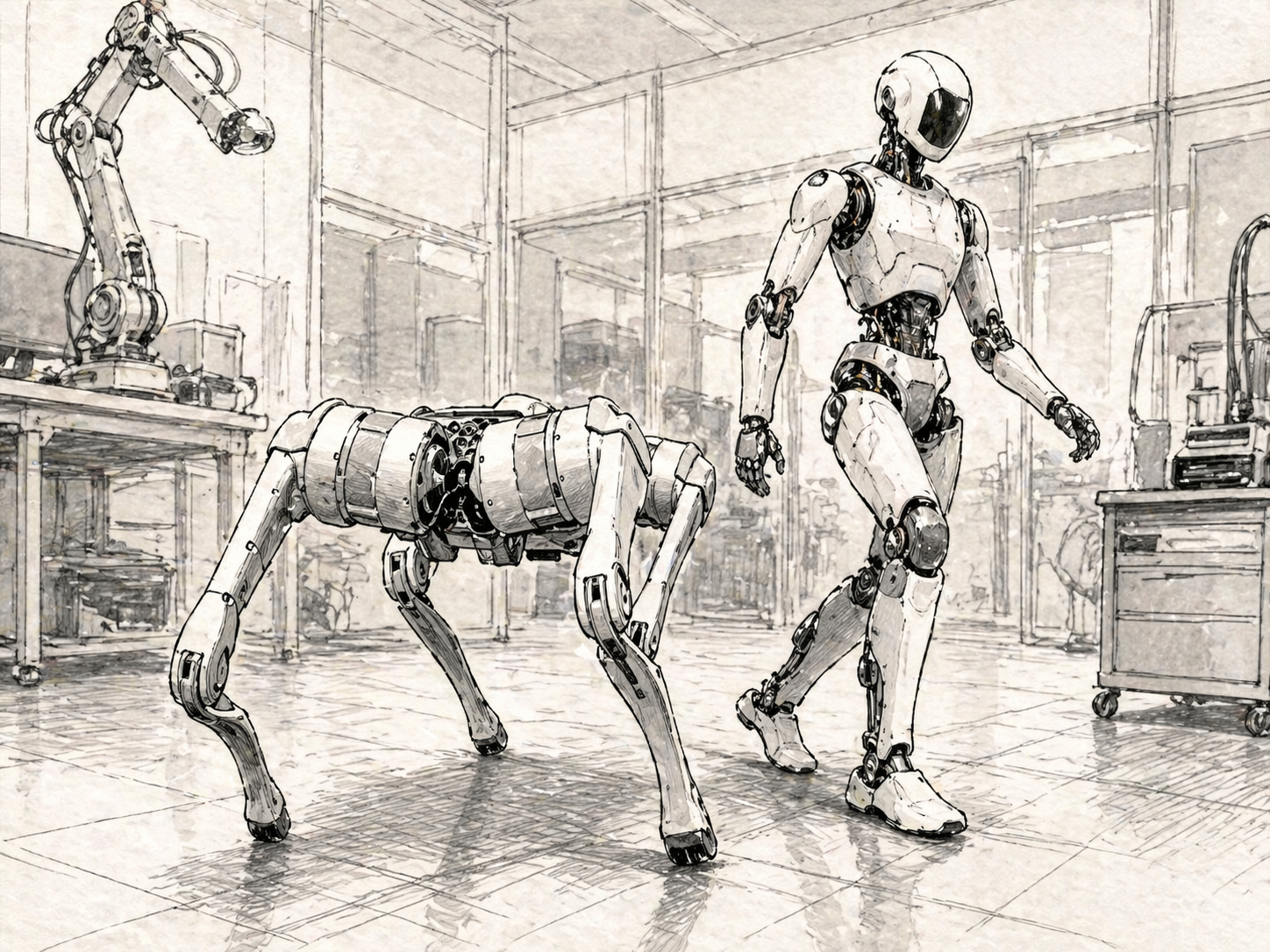
Our laboratory is equipped with multiple Unitree quadruped robots and humanoid robots. These systems are used as experimental platforms to support research on automation and intelligentization in the construction processes of ships and ocean structures. They are utilized in motion planning, cooperative control, integration with process simulations, and the study of production support technologies based on Physical AI. In the future, their application is expected to expand to more practical tasks such as transport, inspection, and assembly assistance.
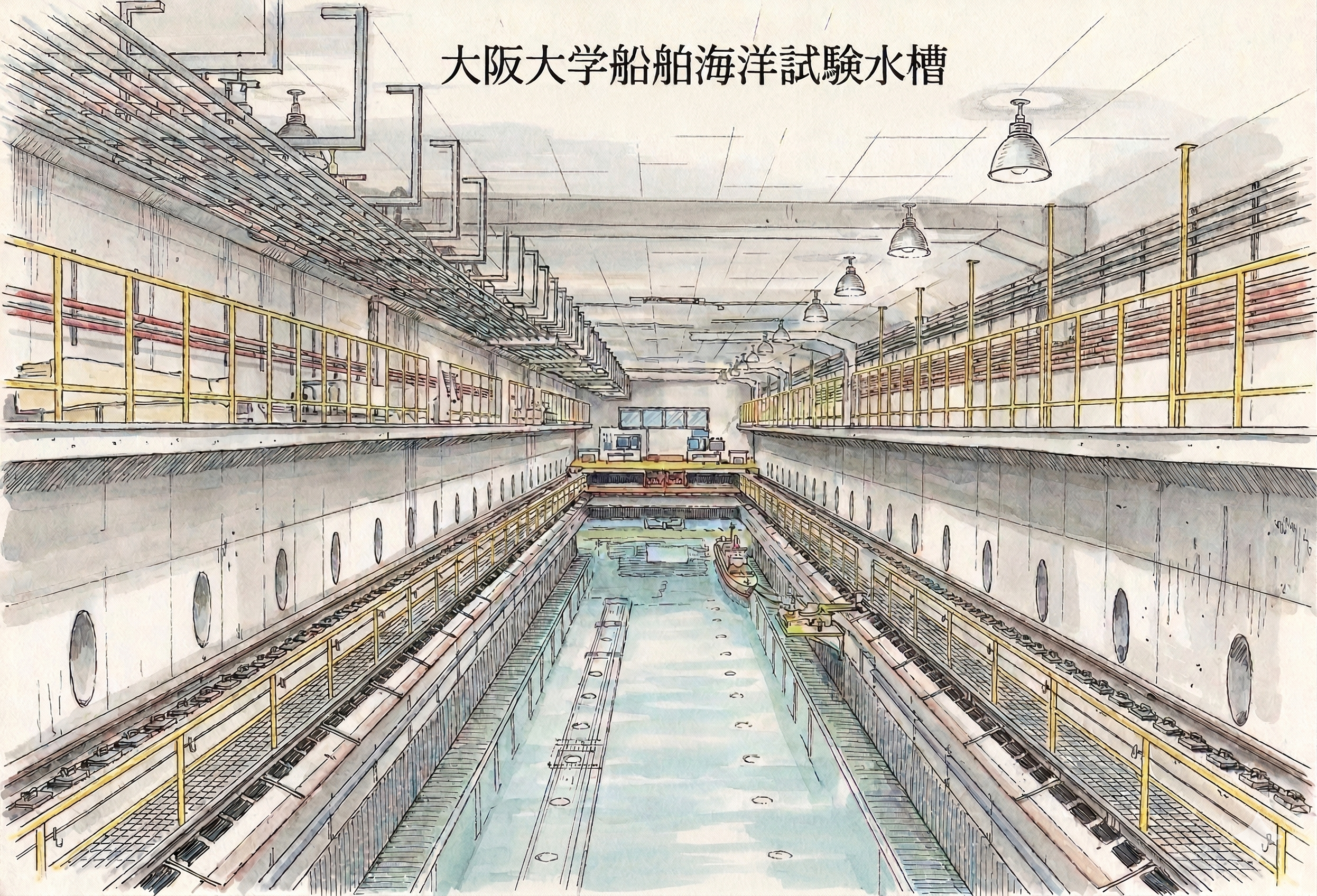
Model tests of ships and ocean structures in a towing tank are one of the most effective means of understanding their behavior in actual sea environments. The towing tank of the School of Engineering, Osaka University, was established in 1970 and has produced many achievements in the field of naval architecture and ocean engineering. The tank is 100 m long, 7.8 m wide, and 4.35 m deep, making it a medium-sized experimental tank (see the facility specifications here). It is equipped with a towing carriage above the tank, a plunger-type wave maker at the rear end, and a wave-absorbing beach at the front end.